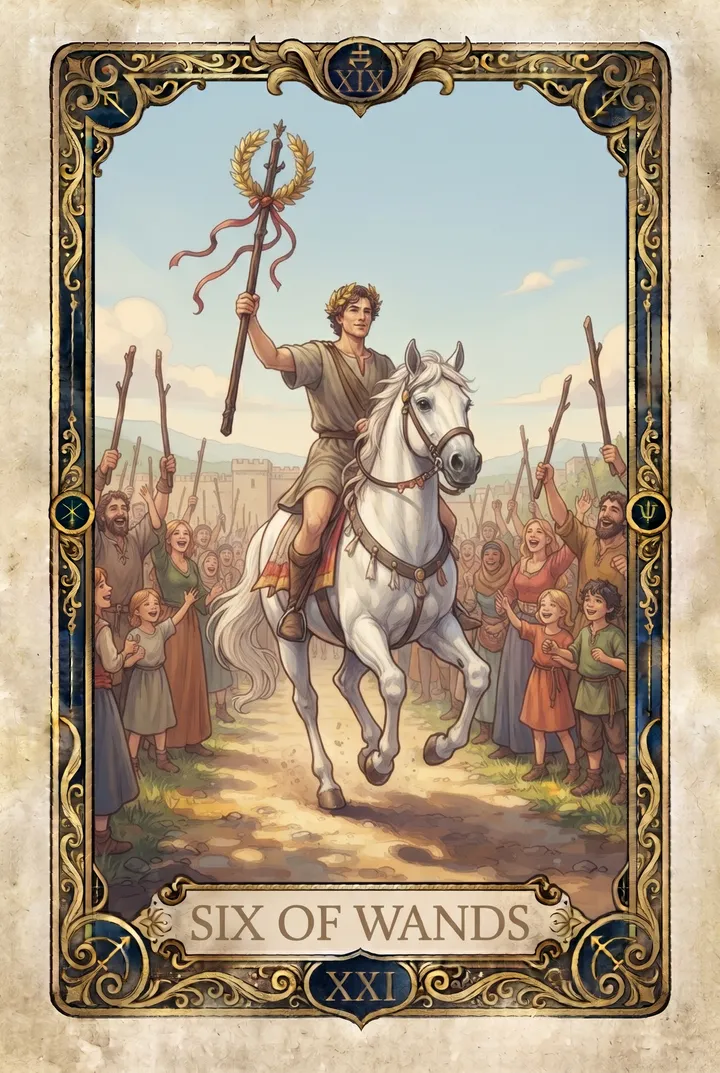
What it means
The Six of Wands is a Minor Arcana card in the suit of Wands, linked in tradition to Fire, momentum, and outward confidence. It points to recognition after effort, the feeling of being seen, and a brief but important victory that others notice too. This is not the quiet satisfaction of working alone in a notebook at midnight, it is the email that says well done, the round of applause after a presentation, or the text from a friend who says you pulled it off.
Because it is a six, the card often suggests a step toward balance after the push and heat of the earlier Wands cards. The energy is no longer just inward drive. It has become visible, shared, and acknowledged.
History and tradition
In the Rider-Waite-Smith tradition, the Six of Wands became known as a card of success, applause, and public acknowledgment. In broader Tarot practice, Wands are associated with action, ambition, creativity, and the spark of will, while the number six often brings harmony, support, and a social dimension. Put together, the card suggests achievement that is not hidden, but recognized in the world around you.
Tarot readers often treat it as a sign that a project has crossed a threshold. You may have worked alone for weeks, then suddenly others notice the result. In readings, this card can point to a promotion, a win, a completed challenge, or simply the relief of hearing, “You did it.” It can also remind you that praise is pleasant, but not the whole point of the work.
How to practice it or how to read it
- Look at the main action in the card. In the Six of Wands, the key theme is visible success, not private effort. Ask yourself where you are being noticed right now, at work, in family life, or in a creative project.
- Notice the mood of the surrounding cards. If harsh cards appear nearby, the victory may come after pressure or criticism. If supportive cards appear, the recognition may feel smoother and easier to accept.
- Read the card in practical terms. It can point to a finished presentation, good feedback from a manager, a contest result, or the simple feeling of having crossed a goal line.
- Ask whether the success is stable. A day of praise is not the same as a long-term foundation. This card often highlights a moment, a stage, or a public nod.
- If you are reading for yourself, notice your reaction. Do you blush when someone compliments you, or do you secretly want the credit? The card often brings that question into view.
Meanings and key points
Upright
Upright, the Six of Wands usually means recognition, confidence, and a clear sign that your effort has landed. In love, this can look like a partner openly appreciating you, or the relief of feeling chosen and valued after a period of uncertainty. It is the message that says, “I saw what you did, and it mattered.” In work, it often shows praise from a boss, a successful launch, or a moment when your name is attached to good results.
This card can also describe a small public win that feels bigger than the number on the page. Maybe you finally speak up in a meeting and someone backs your idea. Maybe you post your work online and people respond warmly. The card says the spotlight is on, at least for now.
Reversed
Reversed, the Six of Wands can point to delayed praise, mixed recognition, or feeling invisible even after doing solid work. In love, this may show up as wanting appreciation that never quite comes, or feeling like you are carrying the emotional weight while others overlook it. In work, it can mean good results without credit, a sense that someone else is getting the applause, or disappointment after expecting applause that does not arrive.
It can also ask whether you are depending too much on outside approval. A day might go well, yet one unreturned message or one overlooked effort ruins the mood. The reversed card often nudges you to ask what success feels like when nobody is clapping.
The line between winning and performing
The Six of Wands is not only about achievement, it is also about being seen. That matters because many people keep pushing until they are exhausted, then feel strangely empty once praise arrives. Picture finishing a big task, only to realize you want rest more than applause. This card helps you notice that tension.
It also reminds you that public success can bring pressure. After one good result, people may expect another. In daily life, that can feel like being the person who always knows the answer, the one who has to keep smiling, or the one everyone congratulates but nobody checks on.
Questions to ask yourself
- Where am I being recognized right now, even in a small way?
- Am I enjoying the praise, or do I feel awkward receiving it?
- What did I do to earn this moment, and what is still unfinished?
- If nobody noticed, would I still value the work I did?
Good to know
This is a Tarot card for reflection and inspiration, not a scientific forecast. Readers interpret the Six of Wands through tradition, symbolism, and the surrounding cards in a spread. It can highlight recognition, but it does not replace practical judgment, and it cannot make decisions for you in work, money, health, or relationships.
Frequently asked questions
What does the Six of Wands mean in Tarot?
The Six of Wands usually means recognition, success, and visible progress. It often shows a moment when your effort is noticed by other people, like praise after work well done or relief after a win.
Is the Six of Wands a yes or no card?
It is usually read as a yes, especially when the question is about progress, approval, or success after effort. The exact answer still depends on the question, the spread, and the cards around it.
What does the reversed Six of Wands mean?
Reversed, it often points to delayed praise, feeling overlooked, or wanting outside approval too much. It can also suggest that the result is good, but the recognition is not arriving in the way you hoped.