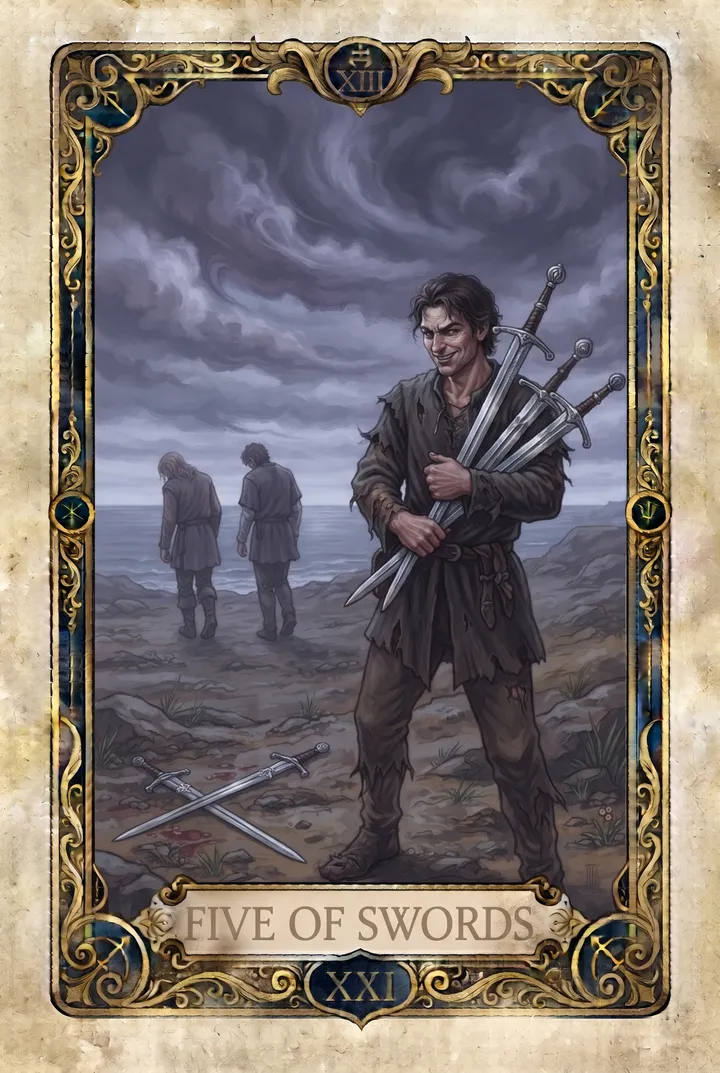
What it means
The Five of Swords is a Minor Arcana card in the suit of Swords, which is linked to Air in tradition. It shows the strain that comes after conflict, when the argument is over but the atmosphere still feels sharp, like a tense family dinner where nobody knows whether to speak or leave.
As a rank 5 card, it often points to a middle point in a struggle, not the first clash and not the final resolution. The card can suggest winning at too high a cost, losing trust, or realizing that being right has not made the situation better. It can also point to hollow victory, when you get the point across but lose warmth, cooperation, or peace in the process.
History and tradition
In the tradition of tarot, the suit of Swords is tied to thought, speech, decisions, conflict, and the sharper side of the mind. The Five of Swords belongs to that field, so readers often see it as a card about arguments, divided loyalties, and the price of trying to dominate a situation.
Traditional tarot readers often describe this card as a warning about harsh language, stubbornness, or the urge to “win” even when the relationship, project, or atmosphere suffers. In a spread, it can show a scene where one person walks away, others are left frustrated, or nobody feels fully satisfied. Because it is a Five, it also carries the sense of instability and friction, the moment when things have become awkward enough that everyone can feel it.
How to read it
- Look at the conflict itself. Ask what the argument is really about, not just the words being used. A disagreement over a meeting time may really be about respect, control, or feeling ignored.
- Notice who is trying to win. In tarot, this card often shows a person focused on victory rather than repair. Think of the coworker who must have the last word, even if the team leaves the room annoyed.
- Check the cost of the outcome. A victory that leaves people cold, embarrassed, or less willing to cooperate is a very Five of Swords outcome.
- Ask what can be left behind. Sometimes the card suggests stepping away from a pointless fight, rather than proving a point that will not help tomorrow.
- Read it with the surrounding cards. If nearby cards are softer, the message may be about healing after tension. If they are harsher, the conflict may be deepening.
Meanings and key points
One central meaning of the Five of Swords is conflict with consequences. Upright, it can show a sharp exchange, a power struggle, or a moment when somebody chooses victory over harmony. At work, that can look like two people arguing in a group chat until the whole team goes quiet. In love, it can look like a couple using cutting words in a fight, then sitting in silence and realizing the room feels colder than before.
Another key point is hollow success. The card can describe getting what you wanted, but not in a way that feels good. Maybe you “won” the discussion about weekend plans, but now nobody wants to go out. Maybe you got your way on a project, but the team no longer feels close. The card asks whether the result is worth the tension it created.
In reversed meaning, the Five of Swords often softens into repair, withdrawal, or the end of a needless battle. In love, reversed can suggest deciding not to escalate a petty issue, like choosing to drop a snide comment before it becomes a full argument. In work, it may point to compromise, apology, or realizing that the mission matters more than the ego. Reversed can also show lingering resentment, so the truce may be quiet rather than fully healed.
Questions to ask yourself
- Where am I trying to win instead of solve the problem?
- What did this conflict cost me, and what did it cost the other person?
- Is this a fight worth continuing, or am I protecting my pride?
- What would a calmer, less defensive response look like right now?
Good to know
Tarot is a symbolic system for reflection, not a scientific method and not a replacement for legal, financial, medical, or mental health advice. The Five of Swords describes what the tradition says about conflict and its aftermath, but it cannot prove what will happen next. Use it as a prompt to think more clearly about tension, choices, and consequences.
Frequently asked questions
Is the Five of Swords a bad tarot card?
Not exactly. It is a difficult card, but not a curse or a fixed outcome. It often points to conflict, pride, or a win that leaves people unhappy, which can be useful information in a reading.
What does the Five of Swords mean in love?
In love, it can show arguments, sharp words, or one person trying to “win” the fight. It may also point to emotional distance after conflict, especially if nobody is willing to soften first.
What does the Five of Swords mean in a yes or no reading?
It usually leans toward no, or at least to a result that comes with tension. The card often says the issue is not a clean win, but a choice that may create friction, resentment, or loss of trust.