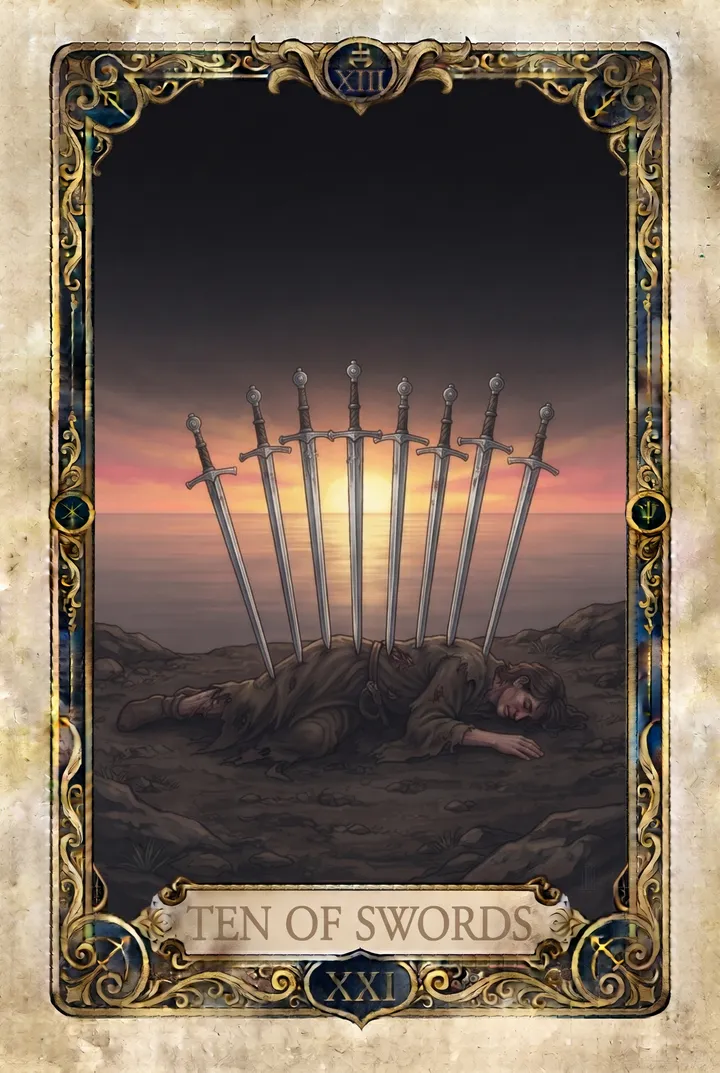
What it is
The Ten of Swords is a Minor Arcana Tarot card that belongs to the suit of Swords, which is linked with Air in tradition. As the number 10, it represents the end point of a cycle, the last stretch before something changes shape or falls away. In a reading, this card usually shows a hard stop, such as a plan that has run out of road, a conversation that finally ends, or a truth that can no longer be avoided.
Because it sits at the far end of the Swords suit, the card is often about mental strain, sharp realizations, and the feeling of being completely spent. It can show a person staring at a situation that has already reached its conclusion. That can feel dramatic, like opening a phone screen and seeing a string of bad messages, or like hearing, after weeks of tension, that a decision has already been made.
History and tradition
The Ten of Swords comes from the Tarot tradition, where the Minor Arcana reflects everyday events, pressures, and turning points. In the suit of Swords, the focus is on thought, speech, conflict, decisions, and the way the mind can cut through, or cut deeply. The number 10 traditionally signals completion, so this card often marks the end of an ordeal rather than the middle of one.
Readers in the Tarot tradition often treat this card as a sign that resistance has been exhausted. When a situation has been stretched too far, the card can appear to show that what was unstable has finally collapsed. In practical reading, it is less about predicting a literal disaster and more about naming a moment when denial is no longer possible. That is why people often pull it during breakups, career dead ends, or periods when they feel mentally overloaded and want an honest answer.
How to read it
- Look at the question first. The Ten of Swords usually speaks most clearly when the issue already feels heavy, finished, or impossible to patch up. A job situation, friendship, or project that keeps failing is a common fit.
- Notice the context around the card. If nearby cards are hopeful, this one may show the low point before a turn. If the spread is already difficult, it can confirm that a line has been crossed.
- Separate fact from panic. The card can reflect the mind telling a very bleak story. Ask what has actually happened, instead of filling in every worst-case scenario.
- Read it as an ending, not a sentence. In many readings, this card says the struggle is over or nearly over, even if it feels raw. That matters when you are staring at an email you have avoided opening.
- If you read reversed cards, watch for delayed collapse, resistance to letting go, or slow recovery. The basic theme stays the same, but the timing or intensity may shift.
Meanings and key points
The first central meaning is ending. The Ten of Swords often shows a chapter that has reached its limit, and trying to force it further only adds strain. In love, that can look like a relationship where the same argument has returned so many times that both people are tired before dinner even starts. In work, it can look like a task, role, or team dynamic that has become impossible to continue in the same way. The card does not soften the truth, but it can name it.
The second meaning is mental overload. Because Swords belong to Air, this card often points to thoughts, words, and decisions that have worn a person down. Upright, it can suggest the feeling of being flat on the floor after too much worry, too much conflict, or too many bad updates. Reversed, it can show the mind beginning to unclench, or the person refusing to admit that something is over. In love, reversed may look like replaying old texts instead of having the final conversation. In work, it may look like stretching a failing project one more week when it clearly needs a new plan.
The third meaning is the quiet after the fall. This card can look brutal, yet it often contains a small, plain kind of relief, the relief that comes when you no longer need to pretend. An ordinary example is finally clearing out a cluttered drawer after months of avoiding it, then realizing the real burden was the avoidance. In Tarot, the Ten of Swords asks you to face the end honestly, so recovery can begin without extra drama.
Questions to ask yourself
- What has clearly run its course, even if I keep hoping it has not?
- Where am I exhausted from thinking the same painful thought again and again?
- What would become simpler if I accepted the ending I already see?
- Am I reacting to facts, or to fear that keeps adding more story?
Good to know
The Ten of Swords is a Tarot symbol, not a scientific diagnosis or a forecast. In tradition, it describes collapse, endings, and the end of a mental burden, but it does not prove what will happen next. If a situation involves serious emotional distress, legal trouble, or money problems, treat the card as a reflection tool, not a substitute for professional help.
Frequently asked questions
What does the Ten of Swords mean in Tarot?
It usually points to an ending, a painful low point, or a situation that has reached its limit. In readings, it often shows the moment when denial is no longer possible and something must be faced plainly.
Is the Ten of Swords a bad card?
It is a difficult card, but not a useless one. It often marks the end of a hard phase, which can bring relief after the worst part is over. The meaning depends on the question and the surrounding cards.
What does the Ten of Swords mean reversed?
Reversed, it can suggest resistance to an ending, delayed collapse, or a slow move toward recovery. Some readers also see it as the first sign that the pain is easing, even if the situation still feels raw.