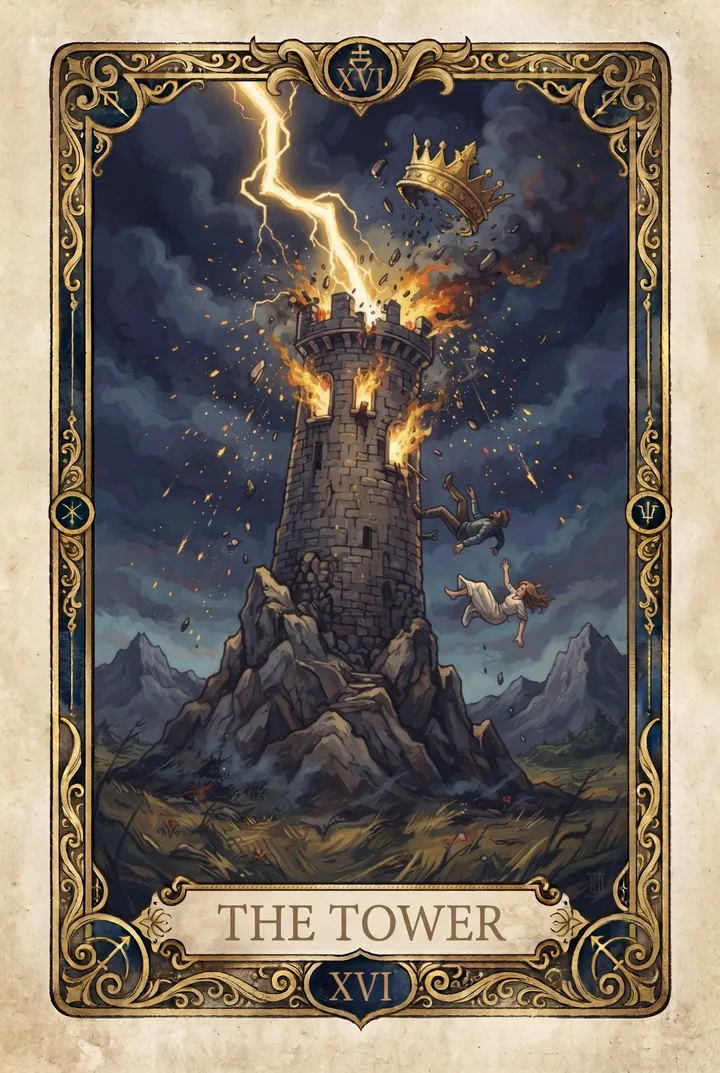
What it is
The Devil is the Major Arcana card numbered XV, a card about bondage, temptation, and the parts of life where desire and fear get tangled together. It often shows up when you feel stuck in a pattern you half-know is unhealthy, like checking your phone too often, saying yes when you mean no, or staying in a situation because leaving feels harder than tolerating it.
In tarot, this card does not mean evil in a movie sense. It points to attachment, secrecy, overindulgence, control, or the feeling that something outside you is pulling the strings. It can also reflect a strong magnetic pull, so the card is not only about warning signs, but also about raw desire, ambition, and the truth of what you are choosing.
History and tradition
The Devil belongs to the traditional Major Arcana, the part of tarot that deals with big turning points and deep patterns rather than simple day-to-day events. In older European tarot, the card developed from Christian imagery of temptation and bondage, so its symbolism naturally carries themes of restriction, shadow, and moral testing.
In modern tarot practice, readers often treat The Devil as a mirror. According to tradition, it asks where you are giving away your power, where pleasure has become compulsion, and where fear is keeping you small. Many readers also see it as a card of honesty, because it can expose what is hidden behind routines, private habits, or quiet resentments. It is less about punishment than about noticing the chain before it tightens.
How to read it, step by step
- Look at the role of pressure. Ask what feels heavy, compulsive, or hard to stop. That could be work stress, scrolling late at night, a draining dynamic, or a secret habit you keep explaining away.
- Name the attachment plainly. Say it in simple words, like, “I keep doing this even though it costs me.” Tarot works best when you avoid vague language and get specific.
- Check where choice still exists. The Devil often feels like captivity, but in everyday life there is usually some small choice available, like saying no, pausing before reacting, or not opening the message right away.
- Read the card with the surrounding cards. With Cups, the issue may be emotional dependency. With Pentacles, money or work pressure may be involved. With Swords, thoughts and fears may be running the loop.
- Ask what feeds the pattern. Sometimes it is boredom, loneliness, status anxiety, or the thrill of doing what you know you should not do.
- Notice whether the card is upright or reversed. Upright, it often shows the pattern clearly. Reversed, it may point to loosening control, denial, or a first step out of the loop.
Meanings and key points
Upright Devil
Upright, The Devil often speaks about temptation, dependency, control, and the feeling that something has a grip on you. In love, it can show chemistry that is strong but messy, where attraction is real and so are jealousy, secrecy, or unequal power. For example, you may keep going back to a person who texts at midnight but disappears in daylight. In work, it can point to a job that pays well but leaves you tense, or to a boss who keeps everyone on edge. The card says to look at what you are tolerating because it is familiar, profitable, or flattering.
Reversed Devil
Reversed, the card often suggests release, awareness, or the first crack in an old pattern. In love, it may show you noticing that the drama is not passion, it is control, and you are ready to step back. A person who once felt irresistible may now look exhausting after you see the pattern clearly. In work, reversed The Devil can mean you are no longer willing to stay silent, overwork for approval, or accept a role that keeps shrinking you. It can also show denial, where the problem is obvious to everyone else but you keep minimizing it.
The card’s key lesson
The Devil is often a card about consent, but not in a legal sense. It asks, “What am I agreeing to, again and again, even though I do not like the result?” That might be food, spending, gossip, a secret crush, people-pleasing, or the habit of staying busy so you never have to sit with your real feelings. A common everyday example is opening your bank app, seeing the damage from impulse buys, and realizing the purchase was not the real need. The card invites you to separate the desire from the story built around it.
Questions to ask yourself
- What feels hardest to stop right now, even when I know it drains me?
- Where am I confusing intensity with closeness, success, or meaning?
- What am I keeping secret because I do not want to face it plainly?
- If I had one small boundary today, what would it be?
Good to know
Tarot is a symbolic and reflective system, not a scientific method. What readers say The Devil means comes from tradition, interpretation, and personal experience, so it should be used for insight and reflection, not as fact. If a situation involves safety, money, legal issues, or mental health, get help from a qualified professional.
Frequently asked questions
What does The Devil tarot card mean in a reading?
It usually points to attachment, temptation, control, or a pattern that keeps repeating. The card often highlights where desire, fear, or habit is running the show more than clear choice.
Is The Devil tarot card bad luck?
Not in tarot tradition. It is a warning card, but also a useful one, because it can reveal what is hidden. Many readers see it as a prompt to notice what is draining your energy or limiting your freedom.
What does The Devil reversed mean in love?
Reversed, it often suggests awareness, release, or a boundary forming around an unhealthy dynamic. In love, it can mean you are seeing the pattern more clearly, or stepping back from attraction that felt overpowering.